
From SDR to a signed enterprise deal, three times faster
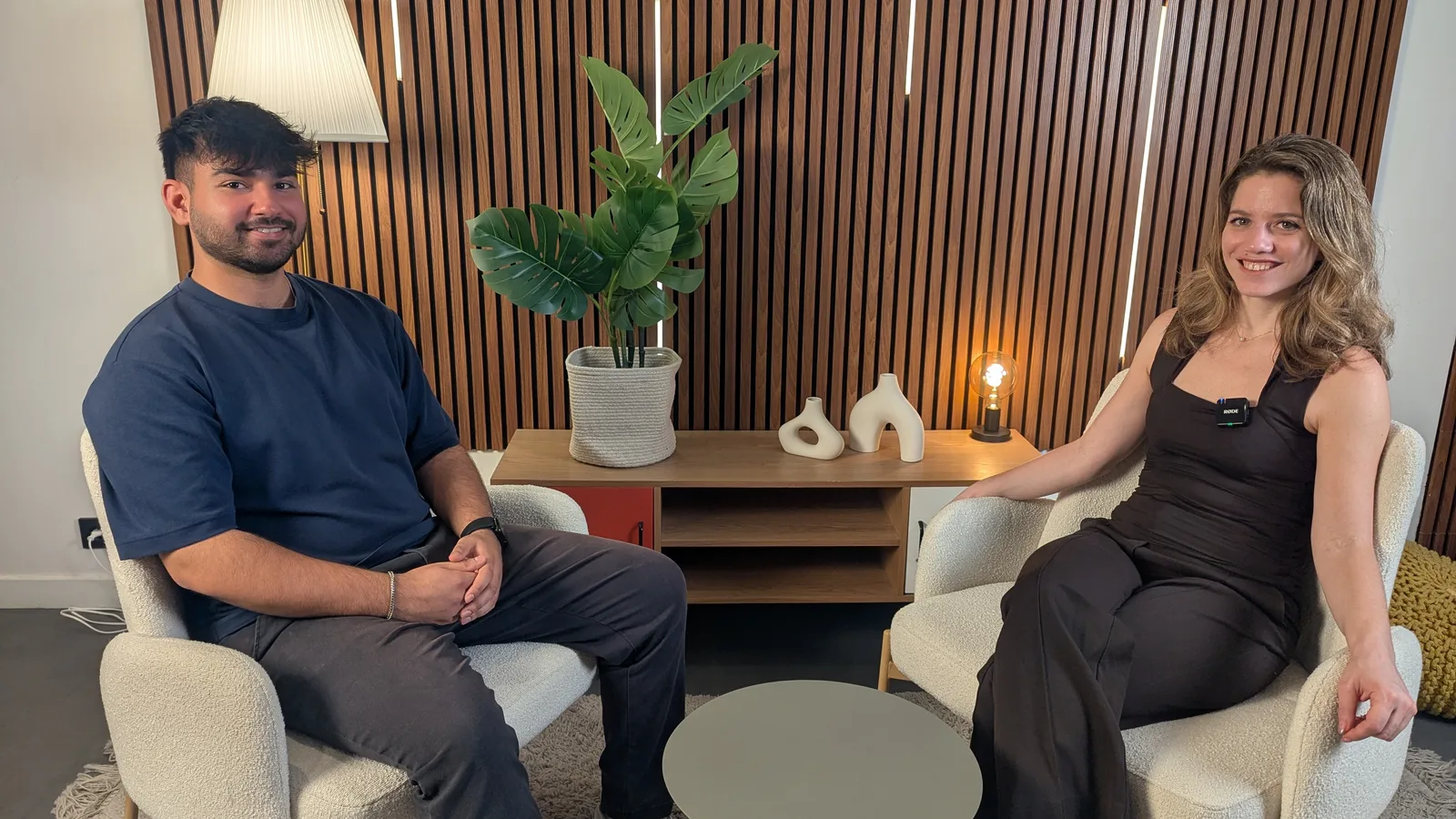
A junior rep usually needs around eighteen months to close their first enterprise account. Kaushal did it in six.
The team
-

Kaushal Ferwerda
Account Executive
-

Camilia Miccolis
Chief Commercial Officer
Ask Kaushal Ferwerda whether he could have closed a six-figure deal the day he stepped into the role, and he does not hedge: “Not in January, no. No chance.”
He is a sales rep in our UK team. He moved from SDR into an account executive role at the start of this year, and six months later signed one of the largest deals of the year: a buying committee running into the dozens, a formal procurement track, a technical evaluation to clear.
What changed in between is that Forge’s coaching moved into his daily work.
The starting point
Kaushal had the foundations. What he did not have was the practice. He picked up demos while still an SDR, sat in on other people’s meetings, and asked the team whenever he got stuck. The knowledge was there; turning it into performance only happens in front of a client. He puts it simply: “You only really learn it once you’re actually doing it.”
Camilia Miccolis, his manager and now Chief Commercial Officer, builds her team’s progression on practice. She joins as many client meetings as she can and puts new reps in front of clients early, in situations where they could fail as easily as succeed. With Kaushal she pushed it further. Instead of starting him on smaller, less complex accounts, she gave him large ones straight away, and her reasoning was about posture as much as skill: “If they start off working on things that are too small, they’ll maybe consider themselves for a long time as a junior person.”
It worked, and it was uncomfortable. Kaushal remembers sitting across from L&D leaders who had been in the field longer than he had been alive, trying to talk as though he knew it better. A rep placed on enterprise accounts that early needs answers straight away, and turning to his peers had an obvious ceiling: they were in their own meetings.
That is the gap the coaching had to close.
What changed in the daily work
Kaushal started using Forge as soon as he had access and now uses it every day. It is connected to his calendar, invited to his discovery meetings, and open on his screen during demos. It is not a separate app he goes to; it is part of how the work gets done.
The clearest change was in preparation. He used to work from one general demo plan that he adjusted by hand for each prospect, which meant every meeting started from the same place. “It wasn’t very personalised, and it wasn’t very high level. It was more about, here’s the feature, this is what it does,” Kaushal explains. Now Forge sits in the discovery meeting, holds the context, and builds the plan for the next one from it: what to show, which pain points to bring forward, which questions to ask, always tied back to that client’s L&D priorities.
His qualification changed with it. He stopped working from the generic playbook questions and started using the ones Forge generates against the specific company and the role of the person in front of him. Objection handling moved from something he reviewed afterwards to something he rehearses before picking up the phone.
And the feedback loop collapsed from days to minutes. He rates his own meetings with Forge straight after they end, and asks it the question most reps save for their manager: “What is your honest, brutal take on the percentage of closing this deal, these are our competitors.”
Camilia noticed the shift before he signed his first deal. What she noticed was a behaviour rather than a skill: “When we introduced Forge to the teams, they really just independently had the curiosity to discover it and go for it. That’s when I realised I have a team I can really count on.”
For her, the value is structural. She travels, she runs the commercial organisation, and she cannot be in every meeting a ramping rep walks into. Forge is there on the days she is not.
Kaushal describes the same thing from the other side. When Camilia is in a meeting and he cannot read a signal in an email, he asks Forge whether it is a good sign or a bad one and gets a debrief on the spot. “I don’t need to wait for someone to be free to get the answer,” he says.
The two kinds of coaching feed each other. When Camilia gives him a suggestion, he takes it to Forge before acting on it: “Sometimes she’ll give me a suggestion and I’ll put it into Forge and say, explain it a bit more, tell me why that’s a good idea, so I have more understanding. So I’m feeding her feedback into Forge, and using that to formulate my next steps.”
Camilia’s feedback sticks because Kaushal can unpack it with Forge, which also makes sure he applies it day to day.
Forge also answers the objection every sales team raises about general-purpose AI. A generic assistant does not know the account, the history, the company’s sales methodology or the platform unless you paste it all in first, which takes time and rules out acting in real time.
The deal
The decisive stretch was a series of sessions over several days with the client’s full cross-functional group, a different topic each day, from platform overview to administration to technical architecture. Around twenty people across the series. It is the kind of format that puts a rep who was an SDR six months earlier under real pressure.
The client sent an agenda in advance. Kaushal put it into Forge and asked for a full plan of each session: what to show, what to say, which compliance topics and use cases had to be covered for this specific buyer. Forge was with him from start to finish.
Kaushal is direct about what it was worth: “That’s really where it helped me the most, in securing the deal. I had the baseline knowledge, I had to personalise it for them. The client said those days were really high quality. One of the key factors in why we won.”
Camilia saw a different rep from the one she promoted in January. He ran demonstrations end to end and held his own in demanding technical discussions. But the change she puts first has nothing to do with knowledge: “How to be in control of the conversation. Instead of just answering questions, being the one guiding the questions and guiding the room.”
The deal closed and was signed.
The numbers
| Time to first enterprise close | 6 months, against a typical 18 |
| Enrolled with his sales coach | 9 February |
| Messages exchanged with his sales coach | 1,378 (1,769 across Forge) |
| Overall learning progress | 75% |
| Course sections completed | 12 of 16 |
| Closing module mastery | 100% |
| Closing-focused exchanges in the recent period | 91 |
| Closing practice delivered in that section | 24+ activities |
The closing practice covered value-based closing, signing workflow, procurement-safe communication, stakeholder alignment and partner coordination. That list of skills follows what he needed at that moment to win that deal: the coaching followed the work.
Where the coaching stops
For Kaushal, the line is contract negotiation. Forge is not going to tell him which clause the business can accept, and in his view it should not try. That is where his manager comes in, and the point of doing it with her is that he will already know the answer for the next deal.
For Camilia, the line is non-verbal communication, which is central to a salesperson’s job. Forge will not tell you that someone rolled their eyes while you were presenting. That remains a 100% human job.
What this changes
A manager cannot sit in every meeting. Recording a call, reviewing it together, forming feedback and finding the slot to deliver it is days of latency on a signal that was only useful before the next conversation. Kaushal sees the difference every day: “It could take a couple of days before you can review a meeting. Whereas with this, I can do it instantly.”
Multiply that by the number of reps on your team and the number of meetings they hold: that is months of work recovered. In this specific case, a ramp three times faster.
Ask Kaushal whether a newly promoted rep should use Forge and it takes him barely a second to answer: “Yes. Straight yes.”
To close, Kaushal shares one more change, and it is the one that matters most to him: “Now I go into any meeting regardless of the job role, and I realise that imposter syndrome is gone.”
No one is born a top performer, but anyone can become one.